


2025
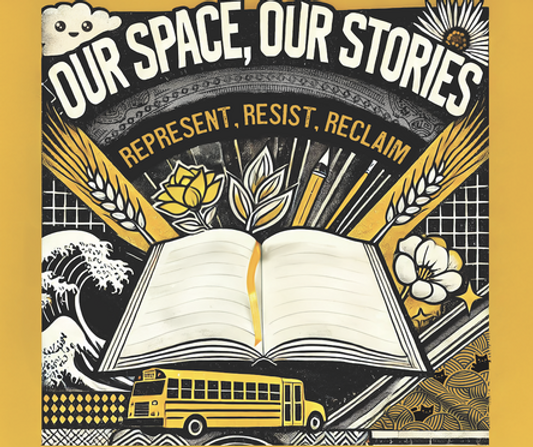
The theme for 2025 was Our Space, Our Stories: Represent, Resist, Reclaim, and the conference was hosted at Mount Vernon School in Atlanta, Georgia. This year featured the student program led by Nishat Alikhan, Eric Khong, and Asako Kurosaka-Jost, as well as the Leadership Lab, the faculty of which included Abe Pachikara, Chia-Chee Chiu, Christina Kyong, Geetha Holdsworth, Juna McDaid, Kavan Yee, and Ricco Siasoco .
The Keynote Speakers were Han Pham, executive director of Her Term, and Weonhee Shin, Executive Director of Asian American Voices in Education. Local Committee members were Pia de Leon, Toni Rose Deanon, Angela Jiang, Eric Khong, Asako Kurosaka-Jost, Nanci UnJung Lee, Sumana Moudgal, Tim Rosenwong, and Rosaline Tio. Sponsors were Harvard-Westlake School, Island School, The Mount Vernon School, SoCal POCIS, TeachAAPI, as well as an anonymous donor.
This was the first year of running the conference as an actual non-profit registered 501(c)(3)!
2025 Conference Information
LAKBAYAN(AI): PILIPINA/X/O FUTURISM, INDIGENIZING FANTASY, KAPWA-
TAO STORYTELLING - MARIA GRACIELA ALCID
How do we step into the ancestral, brown-barefoot wisdom of footprints yet to be laid down? Lakbay
(journey) + Bayani (hero) + Bayan (people and place) + AI (artificial intelligence, algorithmic inquiry, and
ancestral innovation) = Lakbayan(AI), embodies a practice, platform, and pedagogy inspired by my
exploration of accessible and generative AI tools, healing story-art-spirit-weaving, and inquiry-based
future world-building. Lakbayan(AI) is a hands-on, kapwa-centered workshop where participants
cultivate with AI tools, acquire prompt-engineering skills, embody the flow of spoken human-centered,
ancestral storytelling, and intentionally integrate critical kapwa pedagogy to co-create a kapwa-zine
in 60 minutes. Drawing from Pilipina/x/o futurism and historical fantasy, all AsEA educators, scholars,
leaders, are invited to co-create new mythologies that honor our past, empower our present, and
shape our future. (Device recommended for use during session.) Tara na!
ROOTED BUT RISING: HOW TO HONOR YOUR FAMILY AND STILL STAND OUT
AND MAKE YOUR LEGACY - BEA TRAC
In this workshop, we will discuss the definition of legacy and what legacy means to Asian Americans,
especially for those who are rooted in their parents’ American dream. By reflecting on and
examining our hopes for our legacy, we can map how to take strides towards embracing the work
needed to fulfill our legacy in our personal lives with our own families and our professional lives with
our work families and our students. The map may be filled with joy, risks, and pressures. We will
discuss how to embrace the pressure and use this pressure to continue to persevere and still rise.
BADASS ASIAN AMERICANS FROM THE CIVIL RIGHTS ERA - JOSH CHUCK
Join Co-director and Producer of the award-winning documentary film CHINATOWN RISING as he
shares powerful excerpts of the film and speaks on Asian American activism during the 1960s and
70’s and how it relates to the challenges of today’s climate of AAPI Hate and immigration challenges.
Participants will witness vivid examples of solidarity between Asian Americans and African
Americans, intergenerational community organizing, and social justice activism by a long-neglected
and isolated immigrant community. I will be showing several short 2-5 minute film excerpts from the
feature film CHINATOWN RISING. Between clips, I will provide commentary and context for the next
excerpt. I will also share about the unique experience co-directing the film with my 80-year-old
father and conclude with a Q&A.
THE BALLAD OF EAST AND WEST: NAVIGATING ASIAN-WHITE
MULTIRACIAL IDENTITY - TIM ROSENWONG, DREW ISHII & SUSAN WOODS
In 1889, Rudyard Kipling wrote, “East is East and West is West, and never the twain shall meet.” Over a
century later, Pulitzer Prize-winning author Viet Thanh Nguyen referenced this line in The Sympathizer,
using it to mock one of the novel’s few white characters. His critique was aimed not only at colonial
ideologies that positioned Asian identity as fundamentally separate from whiteness but also at the
reductive and racist ways this white character represented Asian-white interracial identity. This
workshop will examine the lived experiences of Asian-white multiracial educators, as well as the
challenges faced by parents raising multiracial Asian children. We will explore the professional, social,
personal, and familial dimensions of navigating a multiracial identity, addressing questions such as:
how do Asian-white educators experience racial belonging or exclusion in predominantly white or
Asian spaces? How do their identities shape interactions with students, colleagues, and institutions?
What unique pressures do parents of Asian-white multiracial children encounter in shaping their
children’s sense of self?
HOW COMMUNITIES OF COLOR ARE DIVIDED: A LITERATURE AND POLICY
REVIEW OF AFFIRMATIVE ACTION - LILIA CAI
In June 2023, the US Supreme Court struck down the consideration of race in college admission.
While consistent data have shown that most Asian Americans have advocated for affirmative action,
this landmark ruling has further pitted the Asian American communities against other communities of
color. In this workshop, Dr. Lilia Cai will review literature that discusses the theoretical support for
affirmative action and present evidence of divisions amongst earlier civil rights and critical race
scholars over the concepts such as “integration,” “diversity,” and “merits.” Breaking down the
correlating history of Asian immigration, Dr. Cai hopes to bring communities of color together and
find our collective voice to advocate against anti-Asian racism while refusing to be used as pawns
of white supremacy against one another.
THE BELONGING WE CREATE: STORIES, CHALLENGES, AND NEXT STEPS -
YOUNG HAH
As Asian American educators in K-12 schools, we often navigate unique challenges in our sense of
belonging — within our schools, communities, and the broader educational landscape. This
interactive session invites participants to reflect on and share their personal experiences of
belonging (or the lack thereof), exchange stories with fellow educators, and collaboratively identify
the needs and wants that matter most to us. Through open-ended discussions and small group
reflections, we will explore the ways our experiences in education are perceived, felt, or shaped
differently, and what next steps we can take to foster a stronger sense of belonging for ourselves
and future Asian American educators. This is a space for open conversation and connection. Our
voices matter.
EVOLVING IDENTITIES: AAPI AFFINITY SPACES AS SITES OF STORYTELLING,
RESISTANCE, AND RECLAMATION - SARAH HUYOUNG & KAREN FUKUSHIMA
Today, AAPI students navigate complex and evolving identities within schools and society at large.
Affinity spaces provide a vital forum for these students to share their stories, process their
experiences, and cultivate a sense of belonging. This workshop will explore how AAPI affinity groups
serve as powerful sites for storytelling, resistance, and reclamation of identity. Participants will
examine how these spaces empower students to push back against stereotypes, affirm intersectional
identities, and foster solidarity within and beyond the AAPI community. Through interactive
discussions, case studies, and best practice sharing, attendees will gain insights into facilitating
meaningful affinity group spaces and ensuring they remain inclusive, dynamic, and responsive to the
evolving needs of AAPI youth.
BUILDING COMMUNITY THROUGH PODCASTS: SHARING OUR STORIES,
SHAPING OUR FUTURE - TONI ROSE DEANON
"Building Community Through Podcasts: Sharing Our Stories, Shaping Our Future" recognizes that our
stories are powerful tools for claiming space and shaping our future. Podcasts aren’t just something
we listen to—they’re something we experience, often sparking reflection, conversation, and
connection. This session explores how the simple act of listening to a podcast can bring people
together, build empathy, and foster a deeper sense of community. Whether it’s a classroom, a book
club, a professional team, or a neighborhood circle, shared podcast experiences can open doors to
dialogue, understanding, and collective growth. We’ll explore strategies for curating powerful
episodes, facilitating meaningful discussions, and using podcasts as a launchpad for community-
building work. Come ready to listen, share, and leave with practical ideas for bringing people
together through the power of story and sound.
MANIFESTING THE CALM IN THE EYE OF A STORM AND FINDING P.E.A.C.E.
FROM WITHIN - REANNE YOUNG & MARIA GRACIELA ALCID
In an era of shifting narratives and increasing uncertainty in an educational landscape, APISA
educators navigate complex and heightened tensions in learning environments where cultural
identity, visibility, and advocacy intersect. We will focus on P.E.A.C.E., a cognitive and SEL framework
that integrates AI as a tool for learning, redesigning, and self-advocacy preparation while we will
also interrogate potential blindspots, bias, and internalized narratives. We will sharpen our capacities
to process overwhelming realities, engage with nuance and imperfection, assess difficult situations
using AI work coupled with collective group work, center ourselves in our cultural truths, and expand
our capacities for resistance and re-design. Join our collective pedagogical practice of P.E.A.C.E
work in service of our students and communities and please bring your laptops to the session.
(Device recommended for use during session.)
SING A SONG FOR OURSELVES: A TALE OF TWO SIBLINGS IN ACTIVISM
AND EDUCATION - JESSICA YOUNG-ELEAZAR & BRANDON YOUNG-ELEAZAR
Join sibling duo, Jessica and Brandon Young-Eleazar, as they discuss how their mother’s lifelong
activism and significant events within their adolescence have influenced their educational journey.
While our approach as educators may vary based on content area and generations, our shared
values ground our work. Learn how we highlight resistance and representation in literature and
music. In this workshop, we will explore how to reclaim the narrative by finding and amplifying your
voice and those voices that are often unheard within the curriculum.
DID YOU EAT YET?: ASIAN AMERICAN VOICES ON FOOD, CULTURE, AND
BELONGING - DEBBY KATZ
What question evokes more Asian love, anxiety, and pathos than “Did you eat yet?” From Eric Kim
coming out over kimchi fried rice to the romantic ups and downs of Always Be My Maybe, food
conveys the complexities of family, pride, assimilation, immigration, cultural memory, and
intergenerational connection. In this workshop, we will explore Asian American representations of
food in literature and pop culture as political and personal, comforting and nerve-wracking, divisive
and healing. Centering Asian American creators such as Ruth Ozeki, C Pam Zhang, Ang Lee, and
Jhumpa Lahiri, we will consider how these depictions inform large social categories such as gender,
sexuality, and class, the connection between food and authenticity, and how food shapes our
relationships with each other and with ourselves.
OUTDOOR LEARNING FOR THE APISA EDUCATOR - DENALI KIKUCHI & LINDA
WISE
Taking learning outside the classroom and into nature gives students the opportunity to learn in new
and different ways, while providing the physical, mental, emotional, and cultural benefits the
outdoors has to offer. As APISA outdoor educators, we know the valuable learning opportunities
nature provides, ranging from core academics to SEL, the arts, and beyond. Teaching outdoors also
gives us the chance to reclaim nature as a place for APISA and BIPOC communities, dismantling
stereotypes about who belongs outdoors and how we spend time in nature. In this workshop, we’ll
discuss ways to provide students with nature experiences and support comfortability outside,
regardless of our teaching focus or greenspace availability. We’ll also head outside to experience
learning in the great outdoors (weather permitting)!
YOU ARE WHAT YOU EAT: EXPLORING IDENTITY AND STORYTELLING
THROUGH FOOD - CHRISTINE PARK
How do communities shape identity? What do food stories reveal about ourselves? Adapted from
826 Valencia’s Don’t Forget to Write curriculum, You Are What You Eat is a personal food narrative
for 8th-grade students to explore identity and community. While reflective for all, it can be
particularly meaningful for our Asian students and their families. Our lovingly-packed lunches often
face stereotypical “ew, what’s that” reactions, and this othering of our food directly and indirectly
impacts our identity formation. This unit can help students process these challenges during middle
school, a time when fitting in is foremost. By examining food as a bridge to their heritage, students
share, connect, and reflect safely, and many stories cultivate gratitude and a deeper sense of self.
STAGING IMMIGRATION: DRAMA AND THE DIASPORA - STEPHANIE KYUNG
SUN WALTERS
Staging Immigration: Drama and the Diaspora centers the work of the theatre and drama teachers!
Walters will share her working knowledge of contemporary playwrights, bringing plays about
immigration, migration, transracial adoption, and other diasporic stories into the drama classroom /
student stage. A portion of the workshop will incorporate rhetorical texts by AAPI writers and BIPOC
theatre makers to support the work of the case study plays. Walters, a national playwright, will share
creative writing exercises to supplement the plays discussed during the workshop, supplying
educators with tools to bring back to their schools. As a group, we’ll crowd-source additional titles to
support the work in the creative classrooms. All participants will receive a full play / text list at the
end of the workshop.
FOUNDATIONS AND FUTURES: ADVANCING ETHNIC STUDIES THROUGH
ASIAN AMERICAN AND PACIFIC ISLANDER CURRICULUM - CHRISTIAN
-JOSEPH MACAHILIG, EUNICE HO & REBECCA APOSTOL
Why do Asian American and Pacific Islander narratives have a limited presence in curriculum? Why
should students learn about Asian American and Pacific Islander communities? These questions
emerged as educators addressed the concerns and lessons learned from the pandemic. These
questions and growing educational needs in AAPI studies nationwide led the UCLA Asian American
Studies Center to develop the upcoming Foundations and Futures: Asian American and Pacific
Islander Textbook, which covers the diverse histories and experiences of AAPI communities through
scholar-written chapters. The workshop will provide attendees with the tools to build cross-cultural
understanding and empathy, while emphasizing the importance of solidarity within and beyond AAPI
communities.
CULTIVATING COMMUNITY - HOW TO FOSTER COMMUNITY AT THE
BEGINNING OF THE SCHOOL YEAR - AVERY BALASBAS
This session explores the intersection of mental health, identity, and community-building in the
classroom through blended instruction, self-pacing, and mastery-based learning. Participants will
engage with the Filipino/a/x Talambuhay, a reflective storytelling practice that fosters connection,
resilience, and self-awareness. By examining the U.S. youth mental health crisis, students develop
personalized self-care plans while integrating autobiographical narratives and Ethnic Studies
frameworks. Attendees will experience a teacher Talambuhay, student exemplars, and an overview
of Unit 0: Modern Classrooms and Unit 1: Community Building & Mental Health. This session equips
educators with self-pacing tools, reflection activities, and strategies for designing inclusive learning
environments that support student well-being. By prioritizing mental health, educators cultivate
sustainable teaching practices and foster a collaborative, identity-affirming classroom culture.
MIRROR MIRROR ON THE WALL: WHO IS THE BADDEST BLINK OF THEM ALL? -
LISA MA & MARIA GRACIELA ALCID
Two educators. One shared Blackpink bias—Lisa. What started as an instant spark of fan-geeking-
extra-glaze, spiraled into an interrogation of K-Pop’s glossy 3D-printed standards of youth-obsessed
perfection. Through humor, vulnerability, and critical self-reflection, we address the tensions of being
radical Blinks while reckoning with the Hallyu-global-commercial-cultural wave and its shadow mask
of colorism and misogyny . How do we navigate our Blink-realness while bumping into its erasures
and in(toxic)ating turns? How does our proximity to Lisa—and her own struggles within the industry—
mirror larger conversations about representation? This workshop is an open dialogue on the
unexpected solidarity that emerges when we question the narratives we are complicit in and the
ones we simultaneously disrupt —and the friendships we build in the process.
WONG KIM ARK, LARRY ITLIONG, AND ALI WONG: STORYTELLING AS
RESISTANCE - RICCO SIASOCO
Asian Americans have always been here. Whether challenging U.S. narratives of birthright citizenship;
activating Filipino American farm workers in California; or re-envisioning whitestream rom-coms and
action thrillers, Asian American storytellers have always given voice to underrepresented voices. In
this workshop, we will explore how stories past and present have been tools to fight oppression and
offer agency. Participants will also walk away from this workshop with tools, prompts, and activities
to highlight storytelling in their own lives and the lives of their students.
